KEY TAKEAWAYS
- PrizePicks launched PrizePicks Packs last month, and OG.com followed last week with OG.com Rips, joining Fanatics and Underdog in selling digital trading card packs.
- PrizePicks argues a digital rip is the online version of a 150-year-old card business and delivered a 70-page legal white paper to state attorneys general before launch.
- No regulator oversees the category, so operators set their own age, identity and spending limits while lawsuits test live breaks and repacks.
Trading card packs once sat on the tobacco counter, then in the bubblegum aisle, and later behind the glass at the local hobby shop.
Now, the products sit in the same apps that sell player picks and event contracts, at a time when both sit under growing regulatory scrutiny.
PrizePicks launched digital card rips product PrizePicks Packs on Oct. 21 in all 50 states and Washington, D.C., with basketball, football and Pokémon packs across nine price tiers from $1 to $2,500.
The headline card is a 2025-26 Topps Chrome Update Cooper Flagg Rookie NBA Debut Patch Auto 1/1 graded PSA 10 — the only card of its type, in perfect condition — which PrizePicks values at $8.04m and calls the most expensive single-player basketball card on record. NBA players Dylan Harper and Kon Knueppel debut patch 1/1s and a 1998 Japanese CoroCoro Comic Illustrator Pikachu, each valued at more than $2.3m, sit in the same pool.
A customer opened the Harper card and sold it back to PrizePicks for $2.8m last week.
Eight days later, Crypto.com-affiliated OG.com launched OG.com Rips inside its app and website, with NFL, NBA, MLB and Pokémon packs across six tiers. OG.com runs a Commodity Futures Trading Commission-regulated exchange, but the company said that Rips “is not regulated by the CFTC and does not offer CFTC-regulated products.”
“Pack ripping is an immediate, physical parallel to the experience OG.com is known for,” OG.com founder and CEO Kris Marszalek said.
Launches follow Fanatics, Underdog into digital card rips
The two launches follow a path already cut by other sports companies.
Fanatics launched Instant Rips in March 2025 through breakers on Fanatics Live, then added Topps Instant Packs to Fanatics Collect in August.
Underdog launched Underdog Rips in late August through a partnership with Phygitals, and Underdog Director of Product Harry Raymond wrote on LinkedIn that customers bought nearly 2 million packs in the product’s first week. This week, news emerged that FanDuel is also beginning to dabble in the space.
The big names are only part of the market. Barron‘s identified 52 websites selling digital repacks this summer. Many smaller platforms market the product through social media ads featuring celebrities and athletes such as comedian and actor Pete Davidson and former and current NFL stars including Michael Vick and Kenneth Walker III.
That combination could put the category under scrutiny. Fantasy and prediction market operators already fight state regulators over what counts as gambling, and now several of them sell a chance-based product that no gaming regulator oversees.
How do digital card rips work?
So, how does it work?
A customer buys a pack on an app, and the pack holds one unknown card that exists in the real world, usually graded and stored in a vault. The customer opens the pack on screen, sees the card, and then chooses to either sell it back to the platform or have it shipped to them. The card may be worth more or less than the pack price. A $5 pack could have a $1 card or a $100 card.
Each platform sets its own terms for its buybacks. Operators post odds by tier before purchase.
Jason Barclay, PrizePicks chief legal officer and head of public policy, said the only part of the process that changes from the 150 years of trading card collecting is the opening.
“In terms of the mechanics, it is no different than what you did and what I did,” Barclay told SBC Americas. “You make a purchase, and it is buying a collectible. In the old days, you would get the physical pack and rip it open. Now, you are ripping it on the screen.”
Ownership passes the moment the customer buys the pack, Barclay said, just like at a card store. If the buyer chooses to keep the pack, they can have it sent to them.
Card packs have sold chance for more than a century
Tobacco companies inserted baseball cards into cigarette packs in the late 1800s, and the American Tobacco Company‘s T206 Honus Wagner, pulled from those packs more than a century ago, remains the hobby’s most famous card. Topps later paired cards with bubble gum, and big-box retailers now sell sealed packs at the checkout lane.
“Over the last 150 years there have been people who have said it is gambling or like gambling,” Barclay said. “In 150 years of opening tobacco tins and bubble gum cards and physical packs sold at Target, it has been uniform and consistent that it is not.”
The business behind those packs keeps growing.
Fanatics Collectibles, which holds the exclusive Topps licenses for the NFL, NBA and MLB, generated about $1.6bn in 2024 and is on pace for $5bn this year. Fanatics CEO Michael Rubin put the figure at $5.5bn in an Oct. 14 CNBC interview. Authenticators graded a record 26.6 million cards last year.
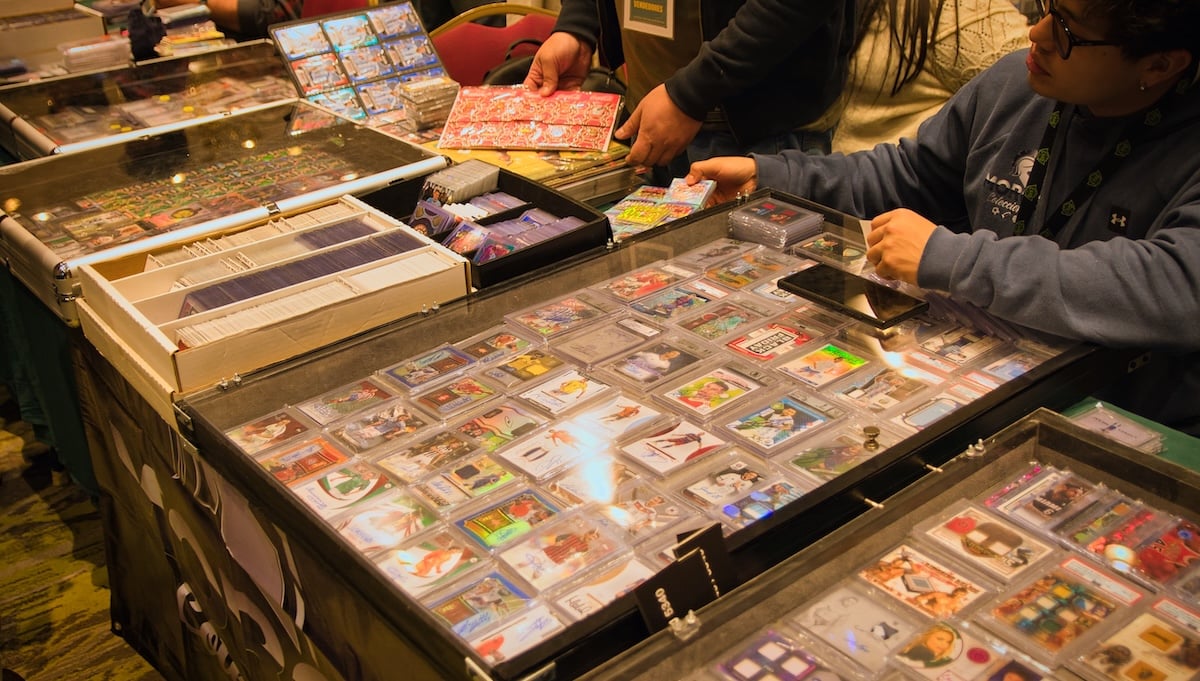
Barclay saw the shift firsthand at the National Sports Collectors Convention in Rosemont, Ill., which drew more than 100,000 people in 2025. A few years ago, he said, it was mostly older collectors at folding tables selling Don Mattingly cards for $5 apiece. This summer, he said, every inch of the convention center was packed, the crowd skewed 20 to 30 years old, and the technology on the floor stood out.
“The level of excitement and energy around sports collectibles is something I have never seen in my lifetime,” Barclay said. “That was not the reason we got in, but it is reflective of the business case.”
Fantasy customers already collect cards
PrizePicks sees Packs as a product for existing customers. Starting with millennials, Barclay said, fans attach to players more than teams, which fuels both fantasy and the chase for a specific card.
“Sports fans chase those like art collectors chase paintings,” he said of one-of-one cards. “We should not apologize for that.”
The digital card rips product also fits the strategy of lottery giant Allwyn, which completed its purchase of a 62.3% stake in PrizePicks in January. Kresimir Spajic, CEO of Allwyn Digital, described an ecosystem where a customer might enter through one product and move to others as their interests change.
“[A customer] might join as an occasional lottery consumer, but he’s also interested in sports,” Spajic told SBC Americas. “So we can funnel him to PrizePicks, and maybe start with trading cards because you have a passion for the NBA. And from trading cards, you also like occasionally to go to a sports bar with your friends and watch your favorite team, and why then wouldn’t I make a wager or entertain myself, choosing either team picks or player picks of my favorite player? And this is a natural graduation.
“This might be that you’re a casual lottery player who buys your ticket once a month or once a week, but you also like trading cards because you’re a sports fan. So that’s perfectly fine, right? It doesn’t mean that we need to graduate you to whatever other product. Maybe this stops there.”
Are there rules around digital card rips?
Whether digital card rips products will attract stern regulatory scrutiny as gaming companies continue to expand their offering remains to be seen.
Barclay did not dispute the regulatory gap. “We will acknowledge this is an area that is not heavily regulated,” he said.
Multiple current and former regulators told SBC Americas they have not looked much into rips and are preoccupied with prediction markets. One regulatory source said it remains to be seen if the products cross the line to be considered a gambling product, but for now it is likely more of an issue for consumer protection and tax collection authorities.
Before launch, Barclay said PrizePicks commissioned a law firm to study the industry, the product, and the platform and to analyze whether it came too close to any gambling laws. The result was a 70-page white paper that PrizePicks delivered to regulators across the country.
The lawyers concluded that Packs looks more like the long history of collectible packs than like gambling, according to Barclay. Federal precedent leans the same way. In Chaset v. Fleer/Skybox, the Ninth Circuit Court of Appeals in 2002 rejected racketeering claims over chase cards in factory packs because buyers received the cards they purchased.
How age limits affect digital card rips views
Age limits answer one of the sharpest differences from the old model, when a kid rode a bike to the neighborhood card shop. Barclay said the convenience of a phone is exactly why PrizePicks keeps the product away from minors. Trading cards are an industry loved by children, and the hobby is moving onto phones just as lawmakers and courts turn up pressure on social media platforms over youth mental health and addiction problems they are accused of fueling.
“It has a potential for abuse and addiction just like any other online platform, gaming or not,” Barclay added. “That is the starting point.”
Spajic sees the category moving along a path that U.S. gaming has followed before, and acknowledges stricter regulations might come.
“In the U.S., what usually happens is when there is a demand and there is no product for that demand, creative people find a way to satisfy that demand, and then two, three years later, the legislation comes and regulates this,” Spajic said. “Without the innovators, things wouldn’t happen, and they’re absolutely necessary. But ultimately, things have to be regulated, because they have to protect the consumers at the end of the day.
“Everything gets regulated at the end of the day, sooner or later.”