
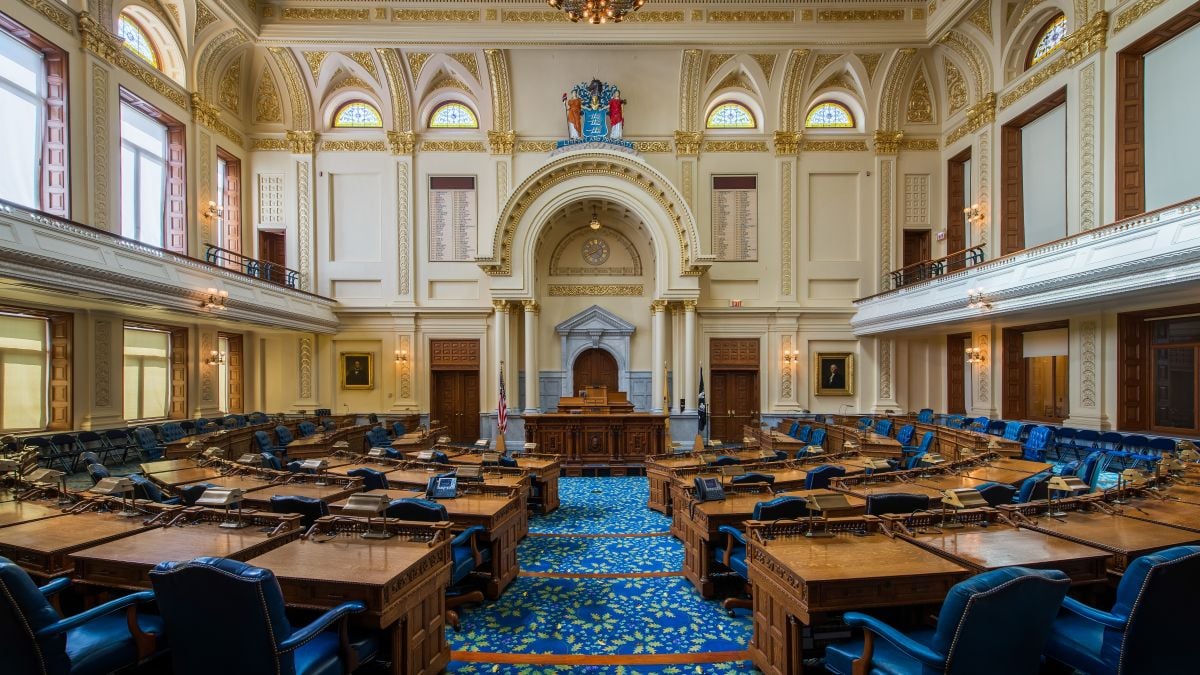
The New Jersey Assembly Tourism, Gaming and the Arts Committee on Monday unanimously approved a resolution that urges the state to ban gaming operators from targeting gambling advertising to people showing signs of problem gambling or addiction.
Rep. William Moen’s Assembly Resolution 150 is concerned not only with preventing sportsbooks from targeting vulnerable gamblers but also with limiting the use of athletes and high-profile figures in gambling advertising and marketing.
Committee members voted 7-0 to advance the legislation at a hearing.
New Jersey legislator provoked by Harper video
The text of the gambling advertising legislation makes numerous direct references to the incident involving FanDuel and Bryce Harper. A personalized video featuring the Philadelphia Phillies star was used to contact a user who reportedly had known struggles with online gambling.
While AR 150 does not mention Harper by name, it cites FanDuel and references the use of “a professional baseball player” in a video.
That incident came to light in July. A recording for the video-sharing marketplace Cameo in 2024 featured Harper addressing a former FanDuel VIP member and his son by name. It was later revealed in a lawsuit that the user had bet more than $18.5m and lost more than $1.5m wagering on FanDuel.
Harper subsequently said that he did not know that the clip would be used as part of FanDuel’s VIP program or used to target a player with gambling-related struggles.
Taking aim at ‘predatory’ celebrity gambling advertising
“Sportsbooks and other gambling entities in this State have an obligation to ensure that responsible gaming practices are followed,” continues the New Jersey resolution. “Among the highest priorities of these responsible gaming practices should be ensuring that individuals who are suffering from a gambling addiction, or who have exhibited signs of problem gambling behavior, are provided with every opportunity to stop their harmful behavior.
“Predatory marketing, including the use of professional athletes or celebrities, which targets certain patrons who are known by sportsbooks and other gambling entities to be gambling addicts, or who have exhibited signs of problem gambling, and encourages them to continue gambling, is antithetical to the goals of responsible gaming and such practices should cease immediately.
“This resolution urges all sports wagering licensees, casino licensees, their contracted operators, and their Internet gaming affiliates in this State to ensure that their VIP programs do not target patrons who are known to be gambling addicts, or who have exhibited signs of problem gambling, with personalized marketing, including the use of professional athletes or celebrities, attempting to induce such patrons to continue gambling.”

Federal, state legislators act after FanDuel furor
The New Jersey resolution also references a letter sent by members of Congress to Major League Baseball and the MLB Players Association on Aug. 10 that asked the league and union whether they would prohibit player-sportsbook partnerships relating to VIP programs.
MLB rules currently allow players to sign endorsement deals with sportsbooks, as long as they do not encourage betting on baseball. But, as noted by MLBPA General Counsel Jeffrey Perconte in a letter in response to the federal legislators’ inquiry, neither the league nor the union has specific rules prohibiting the targeting of known gambling addicts or those who have exhibited signs of problem gambling.
Perconte wrote in the Aug. 24 letter that while the MLBPA believes players should be allowed to sign endorsements and partnerships with gambling operators, the union is “prepared to support [collective bargaining agreement] restrictions that ban players from participating in personalized marketing campaigns connected to a VIP or tier program.”
To that point, the New Jersey resolution urges MLB and the MLBPA, as well as all professional sports leagues and player associations, “to reject participation in such targeted VIP marketing programs when directed to vulnerable patrons.”
Federal lawmakers unhappy with FanDuel response
Meanwhile, the members of Congress recently sent a follow-up letter to FanDuel in which they expressed their dissatisfaction with the sportsbook’s response to their initial inquiry.
“We remain unconvinced that FanDuel is making an active effort to protect bettors from harmful gambling and instead appears to be promoting addiction,” wrote Sen. Richard Blumenthal (D-CT), Rep. Paul Tonko (D-NY), and Rep. Valerie Foushee (D-NC) on Sept. 3. “… FanDuel failed to answer our questions about the specific steps taken to vet and monitor VIP activities, the extent to which VIP managers have encouraged problem gambling with other customers (including such videos), and any changes that it will make to its VIP program after this indefensible conduct.”
New Jersey moves to rein in gambling marketing
The oldest regulated online gambling market in the U.S., New Jersey has been one of the more active states in recent times trying to implement more safeguards around how licensees can market their products.
Among several notable legislative efforts in the last couple of years, Sen. Andrew Zwicker introduced Senate Bill 3401 in February. That legislation would ban online casinos and sportsbooks from using mobile push notifications or text messages to engage users who do not have the app in question open. The bill has not progressed in the legislature since introduction, although the state of Colorado became the first state to enact that legislative change on June 1.
Meanwhile, this time last year, the NJ Division of Gaming Enforcement (DGE) published a new set of proposed regulations that would mandate certain responsible gambling measures in the Garden State, including:
- Establishing new definitions for categories of at-risk players who may require intervention
- Requiring operators to designate one or more “responsible gaming leads” required to identify, monitor, and support at-risk users
- Outlining a list of responsible gaming triggers to be tracked, including things like changing deposit thresholds or RG limits or making multiple cool-off period requests