With the passage of Bill 16 and Bill 48, Alberta is formally moving away from the government monopoly model toward a competitive landscape. On 13th July, the regulated private market will open up, becoming the second Canadian province to offer commercialized sports betting and online casino.
Alberta offers a significant opportunity for North American operators as it is a rare jurisdiction that legalizes both betting on sports and online casino gaming.
Amid this excitement, SBC Americas caught up with Amelco’s Head of Business Development Brandon Walker to see what the supplier has in store in Alberta and learn what makes a successful day one market entry.
Given Amelco’s significant success in Ontario with some of the province’s biggest brands, how are you positioning your technology to lead this new Alberta expansion?
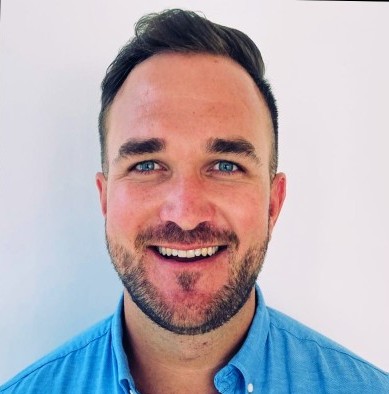
Brandon Walker: For us it comes down to taking our leadership credentials and showing why we’re one of North America’s best. We’re already live with one of Canada’s biggest operators, as well as Fanatics and Hard Rock Bet south of the border.
The “Ontario blueprint” has been a masterclass in how a competitive regulated model should function. In Ontario, we’ve seen total wagers hit CA$82.7 billion in the 2024–25 fiscal year, generating nearly CA$3 billion in gross gaming revenue. We’ve planted our flag as the primary growth engine for some of North America’s biggest brands, helping them cement their positions through sheer, relentless execution with our end-to-end platform, delivering absolutely everything an operator needs under one roof.
Alberta is looking to replicate that success. They’ve recognized that the government-monopoly model no longer suits the province. With the young adult population and the highest per-capita GDP in Canada, the demand for high-tier entertainment is very much there. We are ready to take that same tried-and-tested formula and adapt it for the market as soon as it regulates.
You’ve mentioned the importance of hitting the ground running. How does a new operator get ahead from day one in a province like Alberta, and what is Amelco doing to facilitate that standing start?
BW: In Alberta, the race is won before it even starts. We are already busy getting licensed in the province because we intend to be one of the first movers on the ground. We’re here to show why we’re the best by putting our stake in the ground and making our claim early. In other regions, like LatAm, we’ve been more observant, waiting for the right moment to make a move. This time it’s different and we’re ready to lead as we’re 100% confident in our ability to offer the best product in the space right now.
For an operator, getting ahead means being licensed and ready to go as fast as possible. History shows that early-movers who launch with the best tech and a scalable platform capture the lion’s share of the initial migration. We want to showcase exactly how good we actually are by helping our partners migrate players over to a superior, regulated experience on day one. It’s fantastic to see another Canadian province regulate and our focus is on being the first through the door with the best armoury available for operators.
When Ontario regulated, we saw a “gold rush” with more than 50 operators flocking in. Now, that’s consolidated down to about 10 major players. Do you expect a similar scramble in Alberta?
BW: Alberta will be different. Everyone flocks in at the beginning when they think it’s easy money, but the reality is that North America is a tough, competitive space that eats weak tech for breakfast. I don’t think we’ll see 50 players in Alberta; it’s going to be a much more strategic play.
In Ontario, plenty of brands were having a stab in the dark, hoping their marketing spend would cover up for a sub-par product. It didn’t work. Those who survived are the ones with the best underlying technology—the same as you see in the US, such as with our partners Fanatics and Hard Rock Bet, who consistently rank at the top of the Eilers & Krejcik app charts. Alberta will see fewer entrants, but they will be more serious and better equipped. This is an environment where you either deliver a frictionless, big-league experience or you risk being left behind.
You’ve been very vocal about the “Gen Z Gap” and the risk of extinction for brands that ignore the next generation of players. How does this philosophy shape your product strategy for a new market like Alberta?
BW: The risk of extinction is genuine because complacency is rampant among legacy brands. Gen-Z is the first digital native demographic who have had high-speed internet since they could talk. They demand instant, elegant, and personalised experiences. They simply will not tolerate a spreadsheet-like interface that looks like it was designed in the early 2000s.
For us, the future sportsbook is a content-driven entertainment platform and we are pushing our partners to move toward a UX that resembles Netflix, TikTok, or Instagram rather than a traditional betting site. This means leveraging swipe-and-tap mechanics, micro-betting, and true gamification—think streak-based rewards, communal challenges, and leaderboards. If you aren’t delivering short-form video highlights and hyper-personalized suggestions, you aren’t engaging with the modern player.
Ontario’s data shows that online casino is the dominant engine, accounting for roughly 75% of total market revenue. With sports betting as the major acquisition funnel, how important is that cross-sell in a hockey-mad province like Alberta?
BW: The numbers from Ontario show what’s ahead. In 2024–25, online casino wagers hit CA$69.6 billion, dwarfing sports betting at CA$11.4 billion. While sports, especially hockey in Canada, is the initial hook that drives player counts, iGaming is the structural advantage that keeps the ecosystem profitable.
Our platform is designed for that exact cross-sell. Because we offer the industry’s only truly comprehensive end-to-end platform, the player moves effortlessly between the sportsbook and the casino within a single, high-performance app. We’ve invested aggressively in our iGaming suite so it plays a central role in retention. In Alberta, where the Oilers and Flames are cultural icons, you use the hockey vertical to get them in the door, but you use a world-class casino and gamified content to keep them there – that’s before we even start talking about our award-winning mobile apps.
Finally, as we look toward the mid-2026 launch in Alberta and beyond, what does the growth trajectory look like for Amelco in North America?
BW: Our trajectory is simple: continue to lead. 2025 was a record-breaking year for us, and 2026 is about executing our expansion plan exactly as we need to. We are live in nearly 20 US states, and Canada is now a critical pillar of our global portfolio.
Success in Alberta means backing the industry’s most ambitious operators with technology that can scale as the market grows. If you are ready for the big leagues, you want us on your side. Amelco is here to power the next generation of global leaders; fortune belongs to the brave, and we are here to deliver the best to those who are ready.