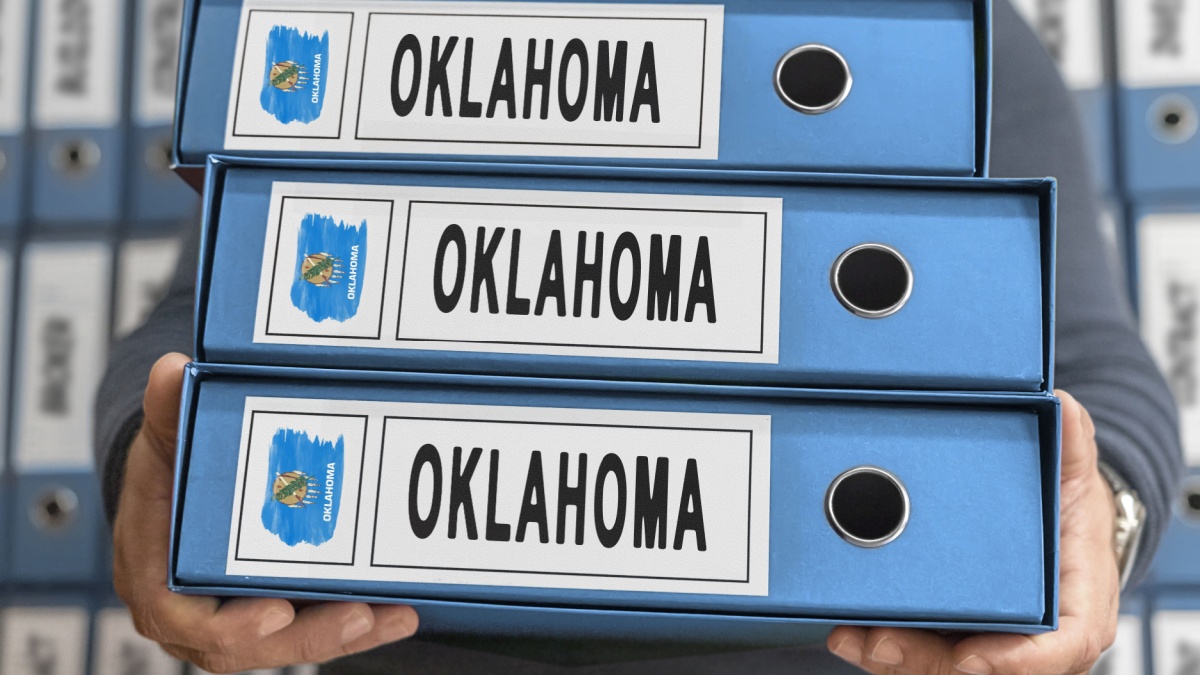
Proposed legislation in Oklahoma aimed at combating the operation of online casino games is moving forward after receiving unanimous approval from state Senate members.
Senate Bill 1589 was advanced on Monday by a 48-0 vote, sending a measure that aims to outlaw certain “online casino games” in Oklahoma to the House floor for further consideration. The bill, introduced by Sen. Todd Gollihare and Rep. Scott Fetgatter, garnered support from the chamber’s Business & Insurance Committee last month.
The measure aims to protect Oklahoma residents and visitors from a lack of consumer protection standards offered by unlicensed online casino game providers, while also acknowledging that unregulated platforms do not adhere to the state’s tax requirements for gambling.
“These illegal offshore entities and foreign operators cost the state of Oklahoma millions of dollars in lost revenue,” said Gollihare when discussing SB 1589 with lawmakers.
If approved by the House and signed by Gov. Kevin Stitt, SB 1589 would take effect on Nov. 1.
Lawmakers in Oklahoma are also considering a companion measure, House Bill 4130, which was approved by a subcommittee and awaits further consideration.
What does SB 1589 consider online casino?
SB 1589 proposes amending Oklahoma’s gambling law to make the delivery and promotion of online casino games a Class C2 felony.
The legislation defines an online casino game as any online gambling game that allows a person to risk “any representative of value” to participate in a game or contest that simulates slot machine gaming, lottery, bingo or prohibited games, all of which are banned under Oklahoma’s current gambling law.
It also provides context for what it considers to be a representative of value, which includes “any and all currency used as part of a dual-currency system of payment that allows a person to exchange such currency for any prize, award, cash, or cash equivalent. . .”
Under SB 1589, a person or operator who violates that measure’s standards for online casino games is subject to a fine that ranges between $500 and $2,000. A violator is also subject to imprisonment, with jail terms that can extend to up to 30 days.
Individuals and operators are not only impacted by SB 1589’s standards. The piece of legislation also extends its prohibition of online casino games to the owner or employee of a geolocation provider, gaming supplier, platform provider, promoter, or affiliate.
SB 1589 took tribes’ input
Gollihare and Fetgatter drafted SB 1589 with input from Oklahoma tribes. The measure was amended to include a provision that provides an exception for tribes that facilitate online gaming. The measure ensures that online games offered “on Indian lands in compliance with the Indian Gaming Regulatory Act” will continue to be available across Oklahoma.
“The Muscogee Nation, for example, has an online gaming platform that deals with casino gaming, and so we made sure to put an amendment in there to allow that for our tribal partners,” said Fetgatter on Monday ahead of SB 1589’s Senate approval.
The bill also protects offerings that fall under the Oklahoma Charity Games Act.
Oklahoma AG has decried illegal gambling
Last year, Oklahoma Attorney General Gentner Drummond and the National Association of Attorneys General sent a letter to the U.S. Department of Justice (DOJ) asking for help in addressing the “rampant spread of illegal offshore gaming operations.”
Gentner and the association requested enforcement action by the DOJ, including the pursuit of injunctive relief and website, asset and domain seizures. The association is also urging the DOJ to work with financial institutions to block “unlawful transactions.”
Another U.S. market advances a dual-currency ban
Oklahoma is far from alone as a state looking to ban dual-currency sweeps. Lawmakers in the likes of Maine, Maryland, Mississippi, Tennessee and Virginia are also considering legislation to prohibit the games in 2026.
Last week, the Indiana House and Senate found an agreement House Bill 1052 and sent the bill, which bans dual-currency sweeps, to Gov. Mike Braun’s desk. The bill was approved by a 46-2 vote in the Senate, with the House passing it 68-21.
The Indiana bill does not criminalize the operation of dual-currency sweepstakes games. However, offenders are subject to a civil penalty of up to $100,000 for any violation. The penalty can be levied against an individual or an operator offering the games but not suppliers or affiliates.