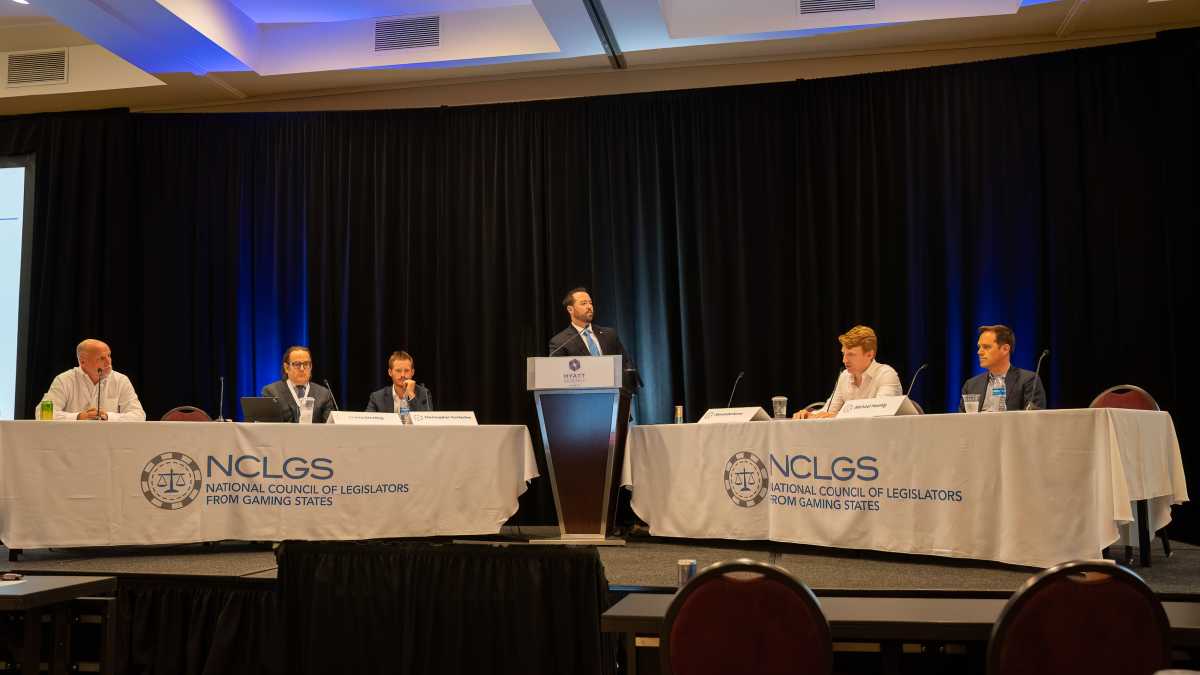
Anyone who has attended a gaming conference will tell you that panels are regularly devoid of conflict and debate.
That was not the case during a discussion on prediction markets at the National Council of Legislators from Gaming States (NCLGS) summer meeting in Louisville, KY.
Josh Sterling, a lawyer from Milbank and former Commodity Futures Trading Commission (CFTC) employee, represents Kalshi in its legal challenges to cease and desist letters from gaming regulators in a trio of states. His comments on a panel regarding prediction markets both gave insight into Kalshi’s legal position and ruffled some feathers in a room full of regulators and lawmakers who believe sports contracts are infringing upon their turf.
Sterling stands firm: sports trading is federal territory
While the gaming industry tries to define where the line between prospecting and gambling is, Sterling found the issue crystal clear.
“The line is drawn in Section 2(a)(1), Title Seven in the United States Code. It basically says any swap or futures contract or an option that’s traded on a CFTC-licensed marketplace is subject to the exclusive jurisdiction of the CFTC.”
Is the utility of a swap even up for debate?
Prediction News Senior Political Writer Chris Gerlacher suggested the courts might be evaluating the economic hedging value of a sports contract as part of its consideration. This is an argument that has been included in court documents asserting that the contracts violate state gaming laws as they do not meet the definition of a swap.
Again, Sterling very firmly disagreed that this issue is even debatable.
“I don’t think that this courts decide there is no economic line drawing around these contracts at all. It’s not for courts to substitute their judgment about what is speculation or what is hedging, or what’s too much speculation,” he countered.
Event contracts as Class III gaming?
While Gerlacher was relatively neutral on his stance on prediction markets and Sporttrade CEO Alex Kane spoke in support of the vertical, the lone panel member representing the position that it is illegal was Vice President Associate General Counsel for Gaming for the Yuhaaviatam of San Manuel Nation Michael Hoenig. The tribe was part of the amicus briefs filed in both the Third Circuit Court and the Maryland case.
“I think we see this as a profound affront to tribal sovereignty. The Indian Gaming Regulatory Act, which is also a federal law, controls gaming activity that occurs on Indian lands per the Indian Regulatory Act, tribes have jurisdiction to determine who gets to operate gaming activity on their lands,” Hoenig observed.
Sterling and Hoenig sparred over whether or not these sports contracts could be interpreted as Class III gaming, in which case the tribes say it is a violation of IGRA to not geolocate tribal lands out of Kalshi’s offering.
Moderator and NCLGS President Shawn Fluharty suggested that CFTC lacks the oversight bandwidth to take on something as big as federal sports betting. He and other panelists also questioned if there were enough consumer protections in place to ensure responsible trading was taking place.
Sterling pushed back at both the notion that there is a bandwidth issue and that RG is something that should even be part of the CFTC’s remit.
Curse those darn taxes
“I’m going to speak personally as a taxpayer. You’ll pardon my French, but I just wish, once in my goddamn life, the government would not say, ‘Boy, if only we had more resources, we could do our job.’ I mean, it’s kind of ridiculous. It’s not hard,” Sterling said to a crowd largely composed of lawmakers and legislators.
Sterling then detailed the wide swath of regulatory agencies that a Designated Contract Market (DCM) deals with in order to offer event contracts, including the Securities and Exchange Commission (SEC).
Who needs RG?
On the consumer protection piece, though, Sterling was not swayed that it is something any regulatory body should even be worried about.
“People are adults, and they’re allowed to spend their money however they want it, and if they lose their shirt, that’s on them.”
He even found the stress on consumer protection a little baffling, calling out the audience for caring whether or not consumers go broke on these particular contracts but not raising concerns about others.
“If I was going to worry about line drawing, why aren’t you regulating trading at West Texas Intermediate (WTI)? It went negative in April of 2020. I know, I was there. I’m sure a lot of people lost their shirts there. But you care because it’s sports? I mean, it seems a little odd to me,” he observed.
Is there room for consumer protections?
Kane was more amenable ot the idea of state regulatory involvement in tandem with the CFTC. He also argued that the model of the exchange is fundamentally better at consumer protection because it allows for competition and choice, but admitted there is room to do more.
“It’s not hard to reinvent the wheel, and it wouldn’t be hard for the agency to come up with a repeating process to protect consumers. It could be as simple as you should allow any retail participant to opt out of event contract trading,” Kane said. Kane also spent time pointing out what he felt were anti-competitive measures, such as a failed attempt in Missouri to reserve two licenses for online-only operators that do not require a brick-and-mortar partner.
Sterling suggested that Kane and Sporttrade would be better served to stop making state-level pleas and move to the CFTC, something that Sporttrade is attempting to do.
CFTC “not interested in rent-seeking and moralizing”
“I would say to people like Alex and the people out there looking to run a business and make a living, if you want to find the one place that’s going to be not that interested in rent seeking and moralizing, that would be the CFTC, the federal law. Where what matters is what the law says, and what doesn’t matter is what the best interests you’re facing have to say to you.”
Fluharty fought back at this, presenting a different point of view for how local lawmakers interpret the new vertical and its impact on the regulated industry that many lawmakers spent years bringing to fruition.
“We have the situation now of prediction markets, which essentially unwinds all that work, and to a legislator when you’re not seeing the revenue numbers that you expected…what’s the message to lawmakers?”
Sterling once again deferred to the position that this is not a change in law, the federal government has always been the group to oversee this. He also expressed little sympathy that Kalshi is digging into state gaming industries.
“No one outlawed the horse and buggy. Ford just made a better product.”
Is Kalshi a different and better product?
As for the product? Fluharty asked what the difference between sports betting and event contracts are, as many believe they are one and the same. In fact, at one point, Sterling casually referred to what Kalshi was offering as “sports betting”.
“I think it’s dramatically different. There are no odds being set. I think that’s better,” Sterling replied.
However, there is functionality in Kalshi’s app that indeed allows contracts to be presented as odds:
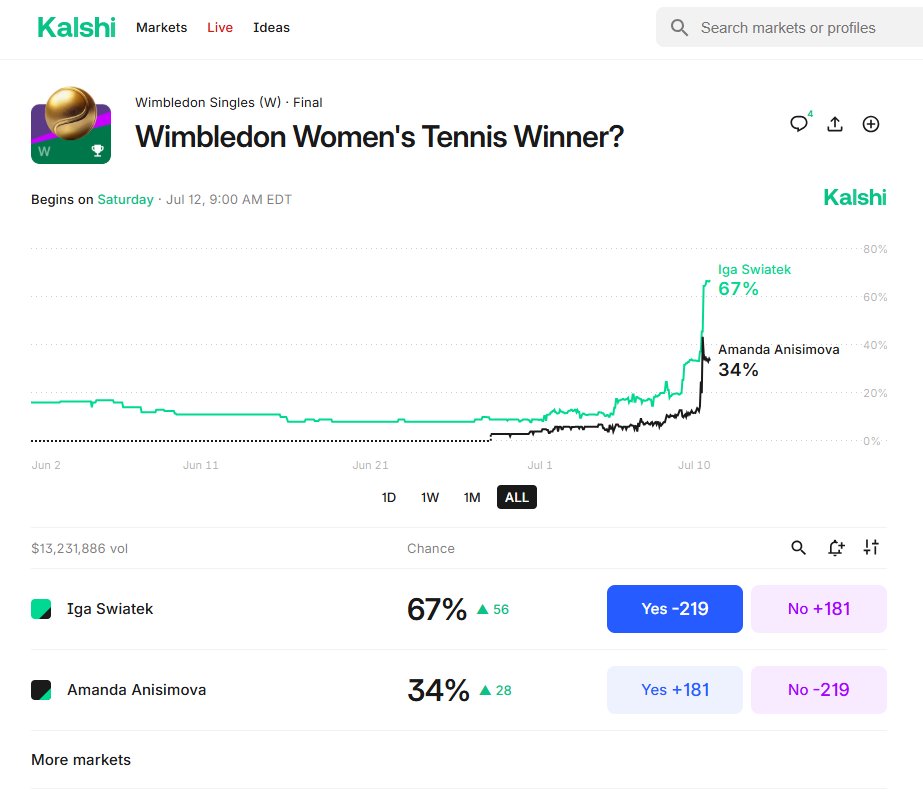
They are also referenced as odds in the settings page:

Sterling noted that in this legal debate, so far, Kalshi is winning. His comments suggest he thinks that will continue to be the case moving forward.
And, while he is an independent counsel and not representative of Kalshi or Crypto.com themselves, his stance gives some insight into where that vertical stands on a range of issues.