
KEY TAKEAWAYS
- Federal lawmakers want leading online sportsbooks and prediction markets to explain their VIP programs and how they tailor promotional offers to individual users.
- Sen. Richard Blumenthal asked six companies to explain themselves in writing by Nov. 5.
- Congress already grilled FanDuel after the Bryce Harper controversy, while DraftKings is under scrutiny for its alleged use of AI to profile users.
Congress expanded its investigation into gambling operators’ use of AI and and their VIP practices on Thursday, questioning several major sportsbooks and prediction market leaders.
U.S. Sen. Richard Blumenthal (D-CT) sent letters on Thursday, Oct. 22, to each of the following companies:
- BetMGM
- Caesars
- DraftKings
- Fanatics
- Kalshi
- Polymarket
He requested answers to a host of questions by Thursday, Nov. 5.
Blumenthal wants to know how the companies conduct their respective VIP or customer tier programs, how they market to VIP users, and how they might use AI to tailor offers intended to encourage gambling. The inquiry extends beyond state-regulated online sportsbooks and includes two of the biggest sports-heavy prediction market platforms in the U.S.
What does Blumenthal want from sportsbooks, prediction markets?
The Congressman asked each of the companies to explain the details of their respective VIP programs, including:
- How many members the operator’s program has
- Details of members’ betting/trading activity prior to being enrolled in the program
- How users qualify to become VIPs, and what kind of betting/trading activity is factored into those decisions
- Whether members looking to reduce their betting/trading activity were presented with exclusive offers, and if so, what those offers entailed and how they affected the members’ activity
- Whether the operator has ever sent videos from athletes or other celebrities to customers in a bid to keep them engaged on the platform
- How much revenue each operator earns from its VIP program
- Whether operators use VIP managers to engage with customers to encourage them to gamble
- If and how the operator uses AI to track and target gamblers with promotions and perks
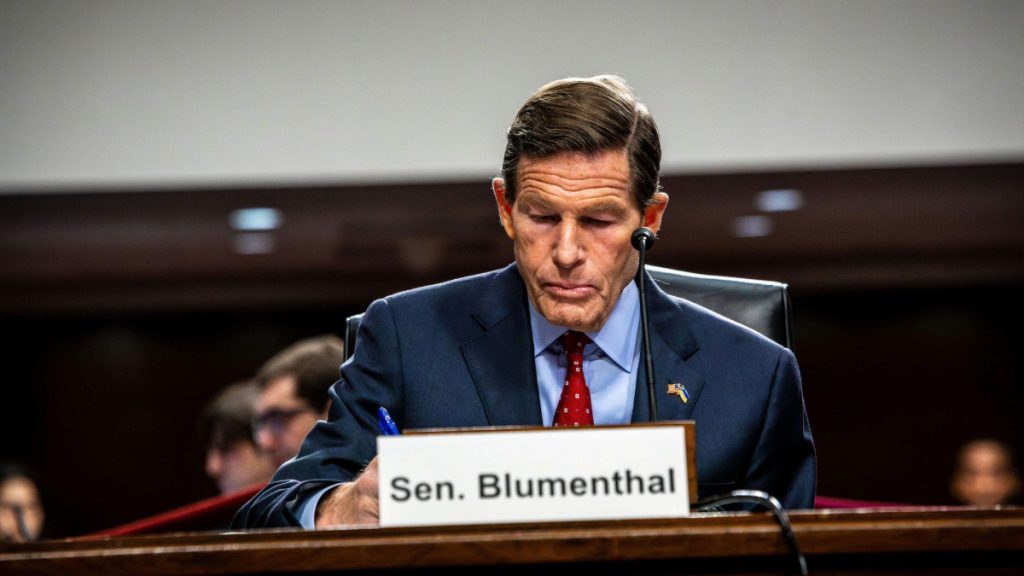
Blumenthal already asked similar questions of FanDuel in recent weeks after expressing dissatisfaction with FanDuel’s explanation regarding the use of a video featuring MLB star Bryce Harper. On Thursday, he extended that inquiry to not only that operator’s sports betting rivals but also two of the biggest sports prediction market platforms in the U.S.
Congress interrogates operators after FanDuel furor
Blumenthal sent the inquiries after going back and forth with FanDuel following that operator’s use of a personalized video message featuring Philadelphia Phillies first baseman Harper.
Reports earlier this year detailed how a FanDuel user with a history of gambling struggles and more than $1.5m in losses on the platform received a Cameo video featuring Harper, who denied knowing about or authorizing FanDuel’s use of the video. Meanwhile, the recipient of the video, a former member of FanDuel’s VIP program, sued the operator and DraftKings in March, accusing them of using VIP hosts to encourage betting and thereby contributing to gambling addiction and financial losses.
Blumenthal, along with Reps. Paul Tonko (D-NY) and Valerie Foushee (D-NC), wrote to FanDuel, MLB, and the MLBPA in August demanding explanations regarding the use of athletes for VIP programs. MLBPA expressed openness to prohibiting players from participating in that kind of personalized marketing campaign.

In September, Blumenthal criticized FanDuel for providing “misleading and incomplete responses” to their inquiry, adding that he and his colleagues were unconvinced that FanDuel makes an active effort to protect bettors from harmful gambling.
FanDuel denies encouraging continued gambling despite more videos
The following month, FanDuel acknowledged in a letter that it sent more than two dozen personalized videos from athletes and entertainers to customers over the past two years. The operator described itself as “a transparent, responsive, and cooperative partner” and said it had no intention of ending the VIP program.
The Flutter-owned brand denied offering perks to keep customers from reducing their activity or closing their accounts and noted some of the policies it has in place around VIP outreach. In a new letter sent this week, FanDuel labeled the videos “customer-appreciation gestures” and denied that it sent them to provoke continued gambling.
“FanDuel empowers customers to manage their play because our goal is to build a customer base that enjoys FanDuel at a level that is right for them, not to maximize wagering activity,” wrote the operator.
DraftKings under fire for alleged AI targeting
Meanwhile, DraftKings is under fire for its own alleged practices after recent reports by The New York Times about the company’s use of AI and by ProPublica about its interactions with problem gamblers.
That mainstream media spotlight prompted numerous states to begin scrutinizing how their gaming licensees use AI, including:
- Louisiana
- Maryland
- Massachusetts
- Michigan
- New York
The Massachusetts Gaming Commission (MGC) wrote to sportsbooks on Oct. 9 to ask them to detail how they use AI in activities including tailoring marketing and promotions, and whether they use a person’s gambling losses as a basis for personalizing or increasing gambling offers.
On the same day, the New York State Gaming Commission (NYSGC) unanimously voted to advance proposed rules that would include banning sportsbooks from using AI and algorithmic profiling to personalize promotions or offering perks intended to increase user spending or engagement.
At the federal level, Blumenthal and Tonko continue to advocate for restricting AI use related to sports betting in their SAFE BET Act.