
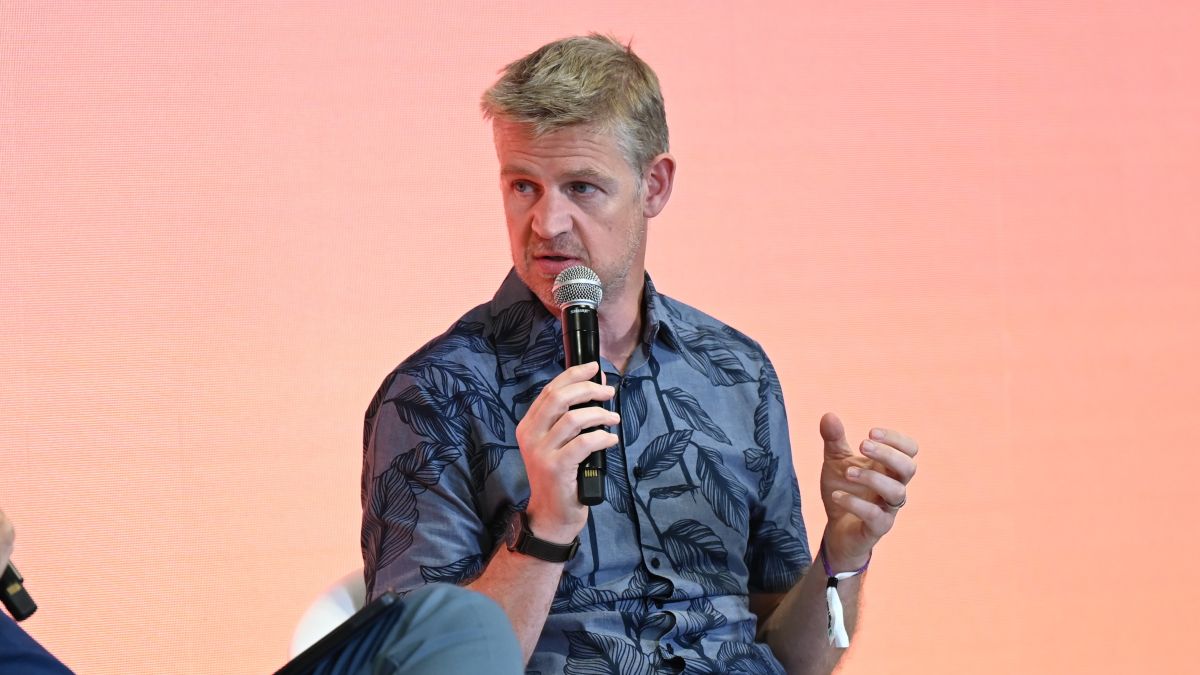
FanDuel co-founder Nigel Eccles has seen a lot and done a lot in more than a quarter of a century in the gaming business.
Eccles chatted with Sports Betting Hall of Fame inductee Sue Schneider on a recent edition of the SBC Leaders podcast to reflect on topics including:
- How he helped to build daily fantasy sports (DFS) in the U.S.
- FanDuel’s early years
- Innovation and entrepreneurship in gaming
- Where he sees online gambling heading next
Turning fantasy contests into a successful daily business
The gaming industry is always evolving, and Eccles’ own career is certainly a reflection of that. Back in 2007, he co-founded what he describes now as the forerunner to FanDuel, a company called HubDub. Given what’s been happening in gambling in 2025 and 2026, was he ahead of his time?
“Originally, it was a prediction market,” Eccles recounted to Schneider, “which is quite funny … For 10 to 15 years, I’ve had to explain to people what a prediction market was. I don’t have to do that anymore!”
Eccles recalls that HubDub was very popular. But sports quickly emerged as its biggest category, a discovery that led to Eccles and his colleagues launching FanDuel in 2009. The team took the existing season-long fantasy contests already played by many Americans and worked on developing the product that we now know these days as DFS, with short-term contests, simplified rules, and real cash prizes.
“That combination of three things just transformed the industry,” he said. “We turned it from something that was very popular into a very successful business.”
‘I knew FanDuel and DraftKings were going to dominate’
Eccles left FanDuel in late 2017, around six months before the repeal of PASPA cleared the way for state-regulated sports betting. His former company quickly emerged as the biggest operator in the market, alongside its rival DraftKings. Did Eccles expect at the time that the company he co-founded would dominate that industry?
“We knew,” he said. “I knew that FanDuel and DraftKings were going to dominate. Jason Robins at DraftKings felt the same … We knew that whenever this opens up, we are going to be sitting there with a nationwide-recognized brand for a product that is very similar to sports betting among young male sports fans, we’re going to have millions of users … So we had a massive advantage over Caesars and MGM.”
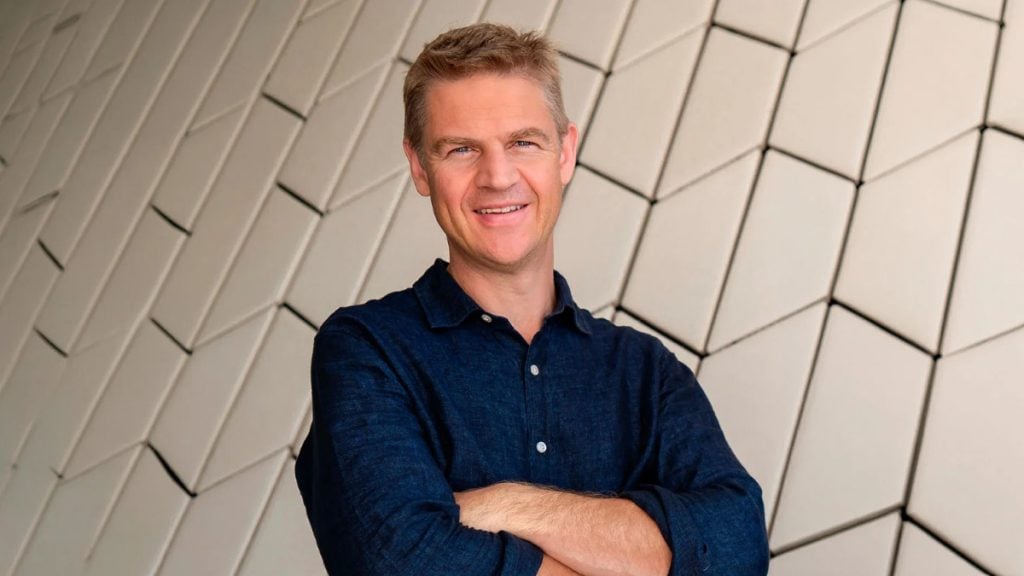
Nigel Eccles’ advice to gaming entrepreneurs
Now the co-founder and CEO of crypto casino and sportsbook BetHog, Eccles is an entrepreneur at heart, having built multiple successful gaming companies and products from the ground up.
His core piece of advice to budding entrepreneurs in the industry? Don’t try to battle the existing giants.
“I think a mistake that any entrepreneur makes is thinking they can compete … with an established giant toe-to-toe,” he ventured. “I wouldn’t go out today and try to launch a prediction market in the U.S. because those companies are now established, they’ve raised billions of dollars in capital. But what I’ve always done is said, ‘ok, where is there white space? When I look at legislation, is there opportunity for innovation that no one’s doing today?’ … You should be thinking about what is going to be hot in three to four years’ time.”
Where is the gambling industry headed?
Given his own experience, and that FanDuel was one of the first gaming companies to dive headfirst into offering prediction markets last year, it’s not surprising he uses that sector as an example of his thinking.
But where else does Eccles think the gaming industry is headed?
“Our industry is going mainstream, in a way, and gambling mechanics are now going into consumer products,” Eccles told Schneider. He acknowledged that while that’s interesting, it poses real concerns about whether people are being pushed into gambling. What he does think is exciting, though, is the potential for AI.
“I think AI is going to have a massive impact. Within three to five years, I think probably 80% of live dealer will be AI-powered … I think existing live dealers will move more towards game show-like products that are much more entertainment-based, but things like blackjack, baccarat, roulette, I think that moves much more towards AI.”
Watch or listen to Nigel Eccles’ full SBC Leaders podcast interview on SBC Media’s YouTube or wherever you get your podcasts.